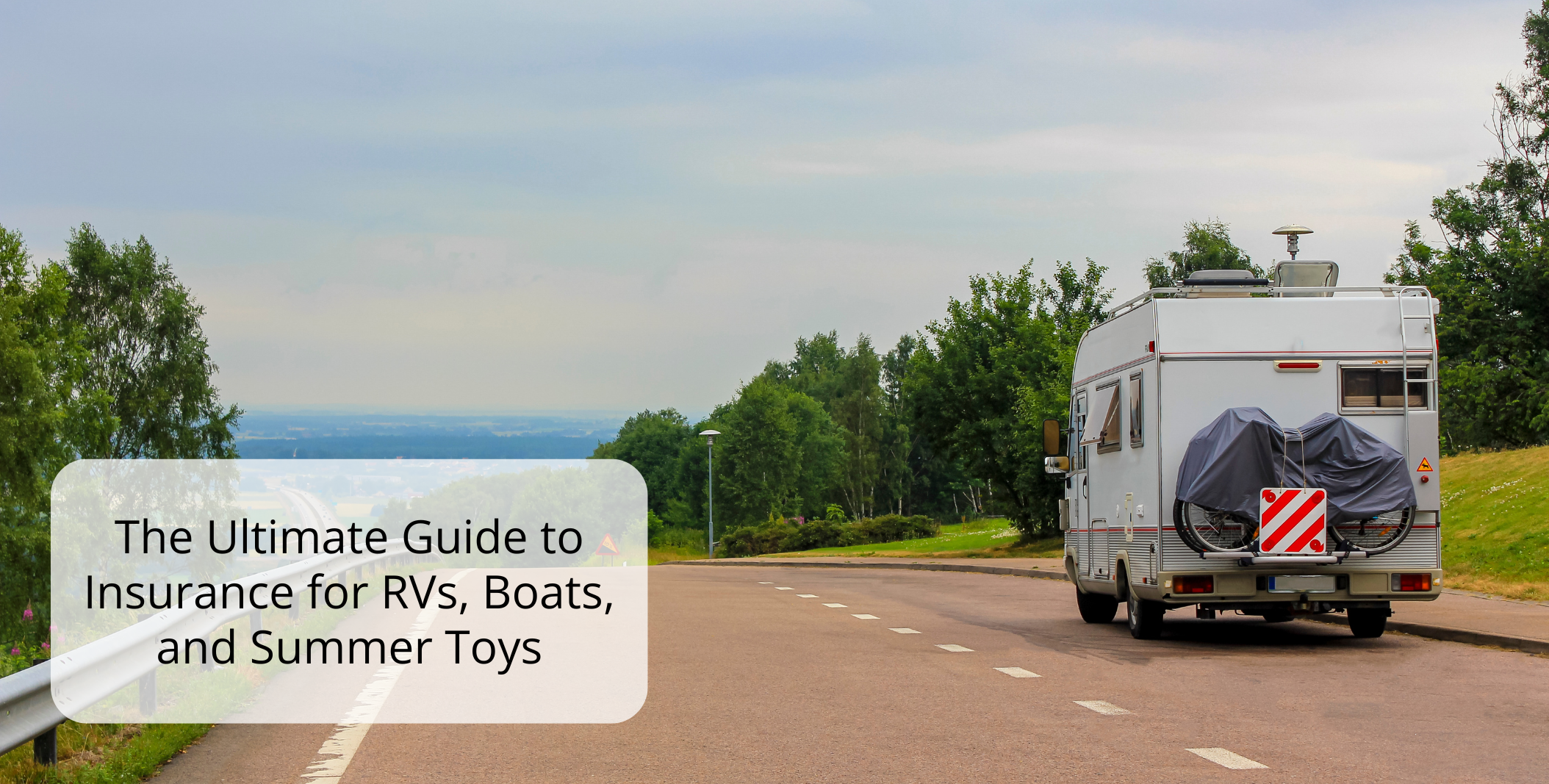
As the weather warms up, many people look forward to heading out on the open road or the water. Whether you’re piloting a Class A motorhome, launching a pontoon boat, or hitting the trails on an ATV, these “summer toys” represent a significant investment in your lifestyle.
However, a common misconception is that these items are automatically or fully covered by a standard auto or homeowners insurance policy. In many cases, specialized recreational vehicle insurance is designed to address the unique risks that these vehicles face.
RV Insurance: More Than Just an Auto Policy
While an RV is a vehicle, it is also a living space. Because of this dual nature, a standard auto policy may not account for the specific needs of an RV owner.
- Recreational vs. Full-Timer Coverage: Insurance companies typically distinguish between those who use their RV for occasional trips and those who live in it for a significant portion of the year. “Full-timer” policies often include additional liability protections similar to those found in a homeowners policy.
- Total Loss Replacement: For newer models, some policies offer an option where, in the event of a total loss, the insurer may replace the RV with a brand-new one of similar quality, rather than paying out the depreciated value.
- Personal Effects Coverage: This typically assists with the cost of replacing personal items kept inside the RV—such as clothing, kitchen gear, and electronics—which might be excluded from a basic auto policy.
Navigating Boat and Personal Watercraft (PWC) Insurance
Watercraft operate in an environment with risks very different from those on land. Specialized boat insurance often includes “marine-specific” coverages that go beyond simple hull protection.
- Liability for Fuel Spills and Wreckage Removal: In many waterways, the owner of a vessel is legally responsible for the cost of cleaning up an accidental fuel spill or removing a sunken wreck. Specialized boat policies often include specific limits for these potentially high-cost events.
- Specialized Equipment: Fishing gear, specialized navigation electronics, and even custom trailers may require specific endorsements to be included in your coverage.
- Lay-Up Periods: Many boaters in seasonal climates choose to utilize a “lay-up” provision. This can lead to a lower premium during the months the boat is in storage and not being navigated, provided the vessel is winterized and not ready for immediate use.
Summer Toys: ATVs, Golf Carts, and Jet Skis
Smaller recreational vehicles are often where coverage gaps are most common. Many homeowners policies provide limited coverage for these items, but often only while they are on your own property.
- Off-Premises Liability: If you take your ATV to a public trail or drive your golf cart around a community, your homeowners insurance may not provide liability protection for accidents that occur away from your residence.
- Collision and Comprehensive: These coverages can help with repairs if your jet ski hits a submerged object or if your ATV is stolen from a trailer while you’re at a rest stop.
- Guest Passenger Liability: Some specialized policies include specific medical payments or liability protection for guests who are injured while riding on your recreational toy.
Understanding How Your Claim is Settled
When reviewing a policy for a boat or RV, one of the most important decisions is how the value of the vehicle is determined.
- Actual Cash Value (ACV): This typically pays the current market value of the item at the time of the loss, accounting for depreciation, age, and wear and tear.
- Replacement Cost Value (RCV): This generally helps pay to replace the item with a new one of similar kind and quality, without a deduction for depreciation.
Choosing between these options often depends on the age of the vehicle and your individual financial goals.
Reviewing Your Summer Strategy
The right time to review your recreational coverage is before the season begins. A policy review allows you to confirm that your limits are still appropriate and that any new accessories—like a new boat motor or an RV solar setup—have been accounted for.
Because every vehicle and every traveler is unique, there is no single “correct” way to structure recreational insurance. An independent agent can provide information about various specialized policies and help you compare how different options might apply to your specific hobby. Ultimately, the decision on which coverages to carry rests with the owner, and understanding your options is the first step toward a well-protected summer.
Disclaimer: The information provided in this article is for educational purposes only. This is not an insurance policy or a legal contract. Coverage options, limits, and exclusions vary significantly by state, insurance provider, and individual policy terms. All claims are subject to the specific terms, conditions, and exclusions of the policy in force at the time of the loss. It is important to consult with a qualified insurance professional for advice tailored to your specific recreational vehicle and lifestyle.