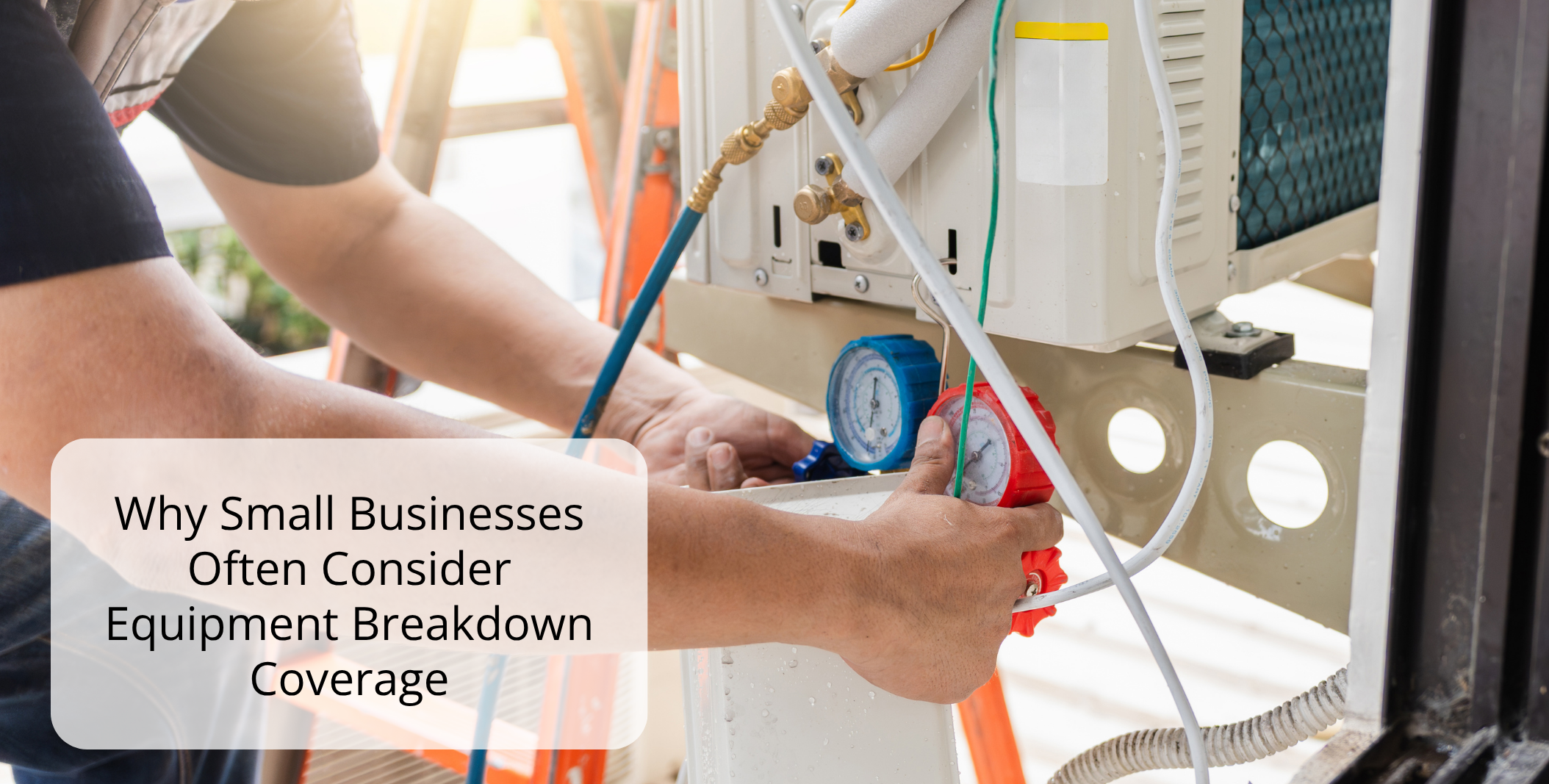
For many small business owners, the “heart” of their operation isn’t just their storefront or their team—it’s the equipment that keeps things running. From the HVAC system in a retail shop to the specialized ovens in a bakery, these systems are essential for daily productivity. However, many business owners are surprised to learn that a standard commercial property policy may not address every type of equipment failure.
Understanding the role of Equipment Breakdown Coverage—historically known as “Boiler and Machinery” insurance—can help you identify potential gaps in your business’s protection strategy.
Internal vs. External Damage: Knowing the Difference
A common misconception is that a commercial property policy is an all-inclusive solution for “stuff that breaks.” In reality, property insurance is typically designed to respond to external forces.
- Commercial Property Insurance: Generally covers damage caused by events like fire, windstorms, theft, or vandalism.
- Equipment Breakdown Coverage: Specifically addresses internal failures that are sudden and accidental.
For example, if a lightning strike (external) fries your computer system, your property policy might apply. However, if that same computer system fails because of an internal power surge or a mechanical short circuit, Equipment Breakdown Coverage is typically the portion of the policy that responds.
What Equipment May Be Covered?
Modern equipment is more interconnected and technologically advanced than ever before, which can make repairs more complex. Equipment Breakdown Coverage often applies to a wide range of systems:
- Mechanical: Motors, engines, water pumps, and elevators.
- Electrical: Transformers, electrical panels, and switchboards.
- Computers & Communication: Servers, phone systems, and point-of-sale (POS) devices.
- Climate Control: HVAC units, boilers, and commercial refrigeration.
- Specialized Machinery: CNC machines, printing presses, or medical diagnostic tools.
Beyond the Repair Bill: The Ripple Effects
The cost of fixing a broken part is often just the beginning of the financial impact. Equipment Breakdown policies are frequently structured to help with the “consequential” losses that follow a failure:
- Business Interruption: If a critical machine fails and forces your business to close for several days, this coverage may help replace the lost income during the downtime.
- Spoilage Coverage: For restaurants or florists, a refrigeration failure can lead to thousands of dollars in ruined inventory. Policies often include a provision to reimburse the value of spoiled goods.
- Expediting Expenses: When every hour of downtime counts, you might need to pay for rush shipping of parts or overtime labor. This coverage can help manage those extra costs.
- Data Restoration: While it typically does not cover software or cyberattacks, it may assist with the cost of restoring data that was lost due to a physical hardware breakdown.
Common Exclusions to Keep in Mind
Equipment Breakdown Coverage is designed for “sudden and accidental” events, which means it is not a substitute for regular maintenance. Policies generally exclude:
- Wear and Tear: Gradual deterioration, rust, or corrosion that occurs over time is typically not covered.
- Lack of Maintenance: If a system fails because it wasn’t serviced according to manufacturer guidelines, a claim may be denied.
- Software and Cyber Risks: Issues related to viruses, malware, or programming errors are generally the domain of Cyber Liability insurance rather than Equipment Breakdown.
Evaluating Your Business Risk
As technology continues to evolve in 2026, the potential cost of an equipment failure often extends far beyond a simple repair. Reviewing your current insurance portfolio can help you determine if your essential systems are protected from both internal and external risks.
Because every business uses different tools and has a unique risk profile, it is often helpful to discuss your operations with an insurance professional. An independent agent can help explain the specific limits and deductibles of various policies, assisting you in finding a combination of coverages that fits your goals. Ultimately, the decision on how to manage your equipment risk rests with you as the business owner.
Disclaimer: The information provided in this article is for educational purposes only. This is not an insurance policy or a legal contract. Coverage varies by state, insurance provider, and individual policy terms. All claims are subject to the specific terms, conditions, and exclusions of the policy in force at the time of the loss. It is important to consult with a qualified insurance professional for advice tailored to your specific business circumstances.